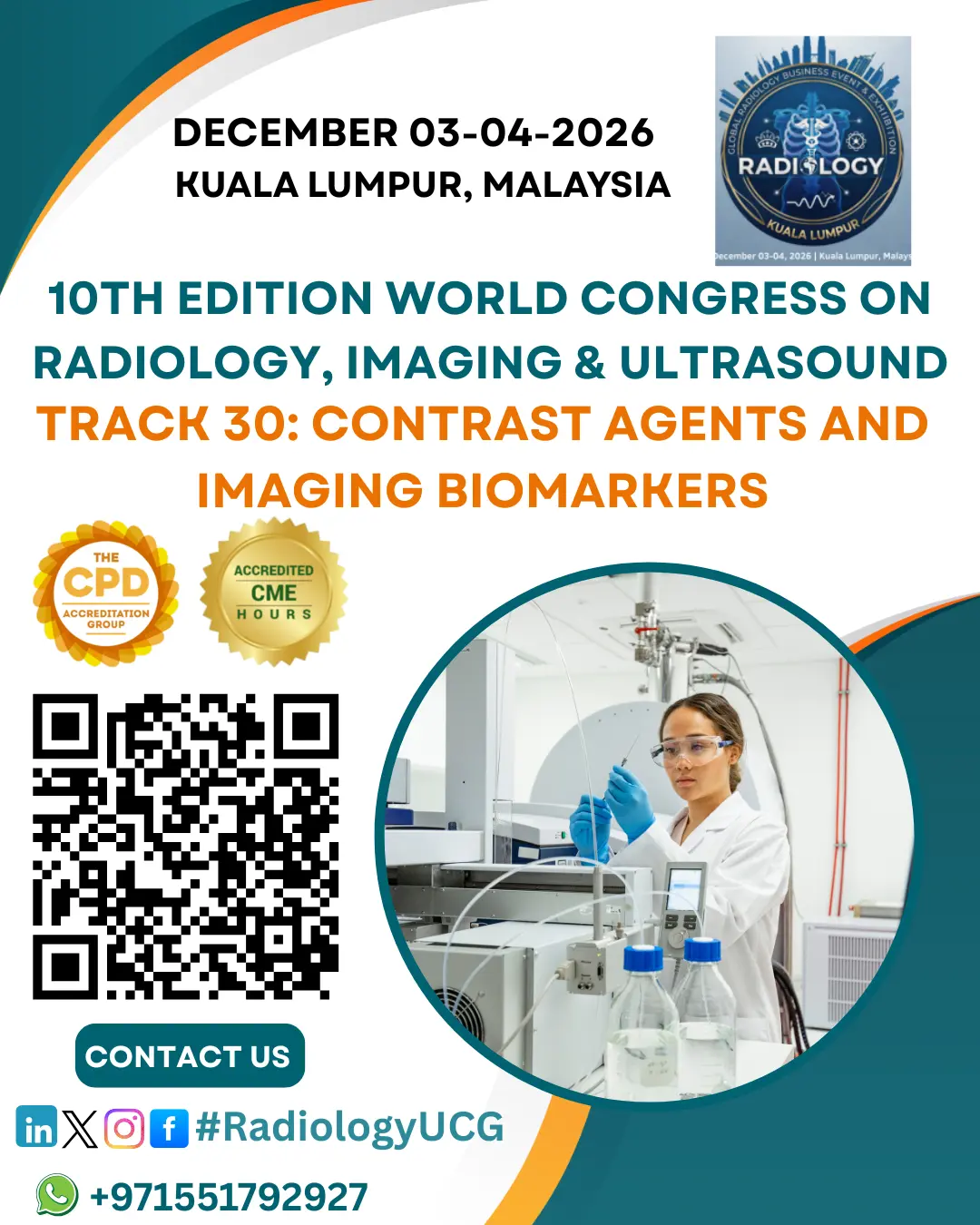
Contrast Agents and Imaging Biomarkers
Medical imaging is a cornerstone of modern healthcare, enabling accurate diagnosis, treatment planning, and monitoring of disease progression. Contrast agents and imaging biomarkers are critical tools that enhance image clarity and provide quantitative insights into physiological, pathological, and molecular processes.
1. Contrast Agents
Contrast agents improve the differentiation of tissues, organs, and vascular structures, supporting precise diagnosis and intervention planning.
Types of Contrast Agents
-
Iodine-based agents: Used in CT imaging for vascular and organ enhancement.
-
Gadolinium-based agents: Employed in MRI for soft tissue, tumor, and inflammatory assessments.
-
Microbubbles: Utilized in ultrasound to evaluate blood flow and perfusion.
-
Radiotracers: Applied in PET and SPECT for functional and metabolic imaging.
Clinical Applications
-
Tumor detection and staging
-
Assessment of vascular abnormalities and organ perfusion
-
Guidance in interventional procedures
2. Imaging Biomarkers
Imaging biomarkers are quantifiable features derived from medical images that reflect biological, functional, or molecular processes. They extend imaging beyond anatomy to provide actionable clinical insights.
Categories of Imaging Biomarkers
-
Anatomical: Organ volume, shape, or structural changes
-
Functional: Perfusion, oxygenation, or blood flow metrics (e.g., fMRI, perfusion CT)
-
Molecular: Cellular or molecular activity visualized via targeted agents or radiotracers
Applications
-
Early disease detection and risk stratification
-
Monitoring therapeutic response in oncology, cardiology, and neurology
-
Supporting precision medicine by identifying patients likely to benefit from targeted therapies
3. Challenges and Future Directions
-
Ensuring safety and minimizing adverse effects of contrast agents
-
Standardizing imaging biomarkers for reproducibility across centers
-
Developing targeted, multifunctional agents for combined diagnostic and therapeutic use (theranostics)
-
Leveraging artificial intelligence for accurate quantification and interpretation of biomarkers
Conclusion
Contrast agents and imaging biomarkers are pivotal in advancing diagnostic imaging. They enhance visualization, provide functional and molecular insights, and support personalized patient care. Continuous innovations are expanding their clinical applications and improving healthcare outcomes.